Is This Glitter Really Biodegradable?
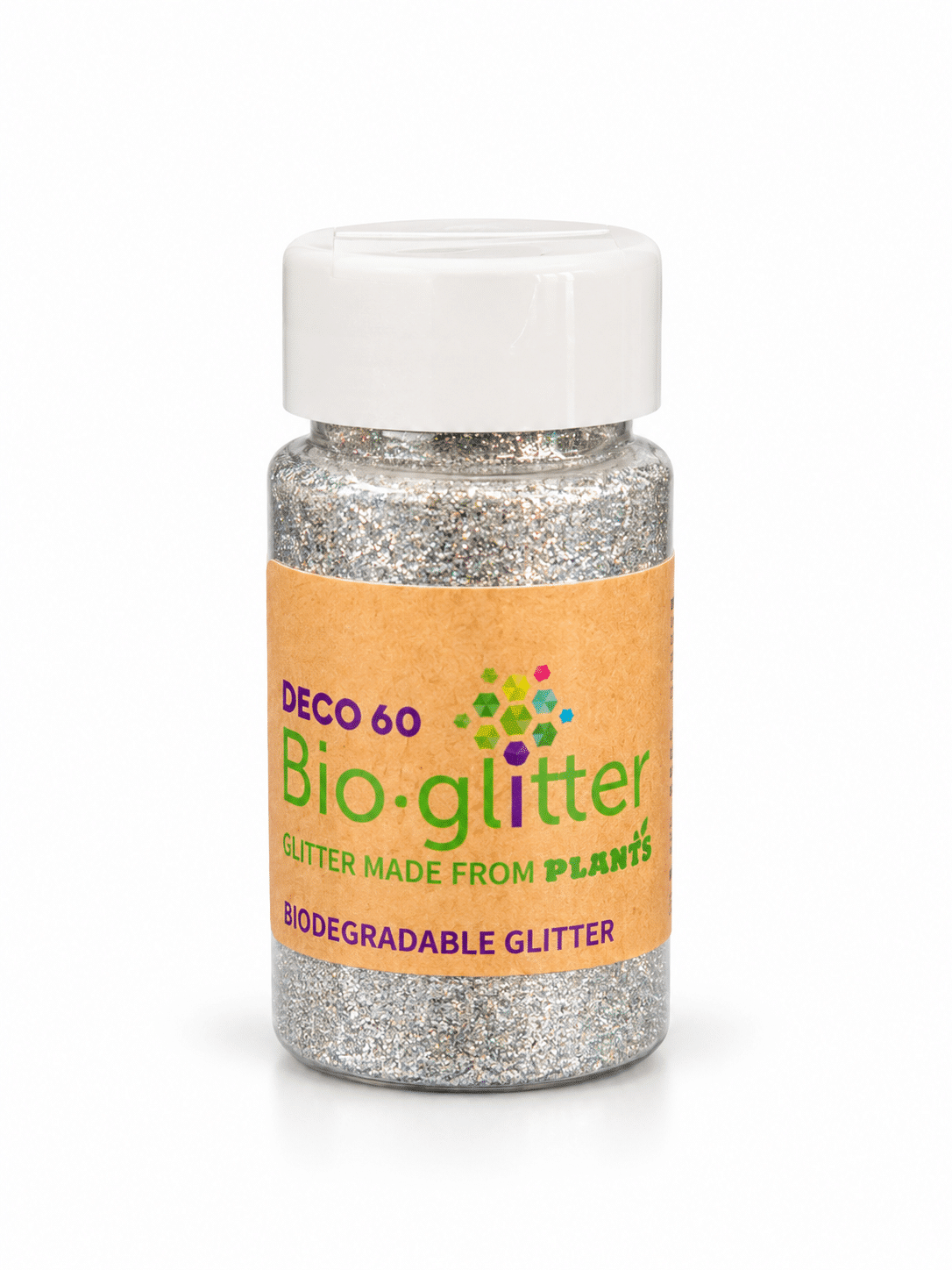
Yes. DECO 60 Bioglitter® is made from plant-based cellulose. The manufacturer states that, in natural freshwater environments, microorganisms break down the particles into CO₂, water and biomass, with biodegradability assessed using international testing methods.
Is It Microplastic?
The manufacturer states that DECO 60 Bioglitter® SPARKLE complies with the requirements of EU Regulation 2023/2055, which addresses synthetic polymer microparticles.
Is It Completely Plastic-Free?
DECO 60 SPARKLE is positioned as a plastic-free decorative Bioglitter® product. However, it is important to distinguish between the different Bioglitter® product lines, as not every Bioglitter® formulation from the manufacturer has an identical composition.
What Is Bioglitter® Made From?
Its main ingredient is plant-based cellulose derived from wood, including eucalyptus. According to the manufacturer, the raw material comes from sustainably managed, PEFC™-certified plantations.
Is Bioglitter® as Sparkly as Plastic Glitter?
The effect is very similar, although conventional PET glitter may reflect light slightly more intensely under certain conditions. Bioglitter® retains a distinct glitter effect, but the sparkle of some colours may appear slightly softer.
Can It Be Used in Candles?
It can be tested for decorative candle and wax projects. The manufacturer states that it is compatible with oil-based systems and resistant to temperatures up to approximately 120 °C. However, an individual burn test is essential for any additive used in candles.
Can Glitter Be Applied Near the Wick?
We do not recommend this. It is better to use glitter as a subtle decorative surface element, away from the wick and active flame area.
Can It Be Used in Wax Melts?
Yes! Start with a small amount and assess colour and glitter stability in the specific wax you are using.
Can It Be Mixed Directly into Wax?
Yes, but Bioglitter® particles are not a pigment and do not dissolve in wax. They remain as separate glitter particles. The final result will depend on the wax viscosity, temperature, amount of glitter and particle settling.
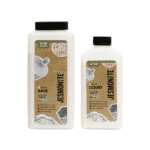
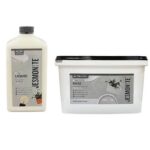
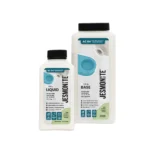
Is It Suitable for Jesmonite?
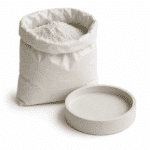
It may be suitable, but because binders and water content vary, we recommend carrying out a small test first and using it primarily for surface decoration.
Is It Suitable for Epoxy Resin?
The manufacturer primarily positions DECO 60 SPARKLE for dry decorative applications and states that it is compatible with oil-based systems. We recommend testing it in a small batch with your specific epoxy resin before preparing a larger quantity.
Is It Suitable for Cosmetics?
No. This product belongs to the DECO range. The manufacturer explicitly states that DECO 60 SPARKLE is not intended for cosmetic use. For cosmetics, choose the separate Cosmetic Bioglitter® range.
Can It Be Used on the Face or Body?
No. This product is sold as a decorative material, not a cosmetic ingredient.
Can It Be Used for Food or Cake Decoration?
No. Sigmund Lindner states that Bioglitter® products are not intended for consumption or direct use in food.
Is It Suitable for Children's Crafts?
DECO 60 is designed for creative projects at home, in schools and in nurseries. The product is reported to have very low heavy metal content, well below the limits specified by EN 71, OEKO-TEX® and GOTS. Nevertheless, it is a craft material, not food or cosmetics, and children should use it under adult supervision.
Can It Be Used on Plants and in Floristry?
Yes. Floristry and plant arrangements are among the intended applications of DECO 60 Bioglitter®.
Can a Decorated Item Be Washed?
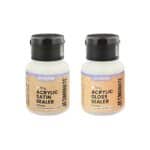
If glitter is attached to a surface, the final water resistance will depend primarily on the adhesive or sealer used. DECO 60 itself is not intended for prolonged immersion in water.
Does the Glitter Dissolve?
No. It does not dissolve like a colourant. Biodegradability means that, under suitable environmental conditions, the material is gradually broken down by microorganisms. This is not the same as dissolving instantly in water.
Why Is It Called “60”?
This is part of the manufacturer's DECO Bioglitter® product line name, not a percentage of glitter or a particle-size measurement.
Is This Original Bioglitter®?
Yes. The product is manufactured by Sigmund Lindner GmbH / SiLi in Germany. Bioglitter® is a registered trademark of the manufacturer.


 Jesmonite AC84